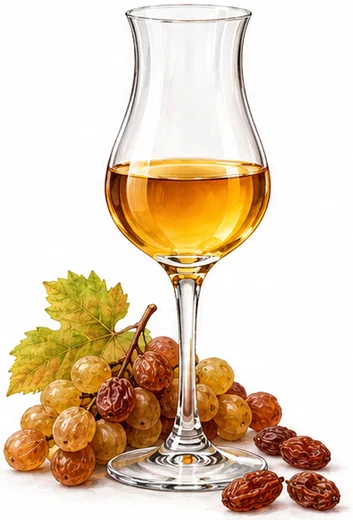
Sweetness begins in the vineyard
Visit Hungary describes a combination of autumn mist and sunshine: Botrytis and berry dehydration help concentrate their contents. Selected aszú berries are collected separately and macerated in must or base wine. Pressing, fermentation and maturation follow. This differs from simply adding a liqueur to finished dry wine. Selecting individual berries is a substantial part of the vineyard work, rather than merely an attractive expression on the label. The process helps explain why Aszú is a distinct wine category.
Tokaj means more than Aszú
Tokaj-Hegyalja contains many settlements; a point at Tokaj town does not outline the region. Hungary’s part of it also produces dry wines. Furmint and Hárslevelű are important grapes, but a grape name alone does not establish that a wine is Aszú. Eszencia is a separate concept, associated with juice released under the weight of collected berries. It should not be used as a more elaborate name for every sweet Tokaj wine. Producer and category remain essential label information.
Understanding style and service
Hungarian material identifies dried apricot, honey and floral notes. Intensity and colour change with vintage, maturation and producer, so an amber illustration is not a compulsory appearance for every bottle. For its own Aszú, Royal Tokaji recommends cool service and suggests fruit desserts or hard cheeses. This is a useful starting point rather than a universal requirement. When comparing with Mosel Riesling, first establish whether the Riesling is sweet too. Otherwise the comparison concerns contrasting wine styles as well as different places.
Flavour profile
Documented reference points include dried apricot, honey and flowers with concentrated flavour. Colour and the balance between sweetness and acidity depend on the individual wine.
How it is served
Serve cool in a small wine-glass portion. Royal Tokaji suggests fruit-based desserts and hard cheeses as possible partners for its own Aszú.
A place on the map
The gazetteer point represents Tokaj, not an exact producer address or production boundary. WGS84 source coordinates are retained; decimal places do not imply survey accuracy.
48.11717°N · 21.40922°E
Find on the map →Sources & further reading
- Visit Hungary — Hungarian wine, sections on Tokaj and AszúSource checked: 2026-10-19
- Slovakia.travel — Tokaj regionSource checked: 2026-10-19
- Royal Tokaji — Aszú 5 Puttonyos 2018Source checked: 2026-10-19
Original catalogue sources — original check dates retained
- Visit Hungary - Tokaj Wine RegionSource checked: 2026-10-14
- Slovakia.travel - Tokaj regionSource checked: 2026-10-14
Prepared with AI assistance from the cited sources. No first-hand tastings or invented reviews. About the atlas.