Three valleys, not one town
Germany’s Mosel wine region includes the valleys of the Mosel, Saar and Ruwer. Bernkastel-Kues represents the Middle Mosel in this atlas, not the entire territory following those rivers. The German Wine Institute describes the importance of steep and terraced vineyards and Riesling’s leading role. The grape also grows elsewhere in Germany and abroad. A label saying Riesling therefore needs a separate origin statement before the wine can be understood as a Mosel example.
Colour and aroma are only part of the story
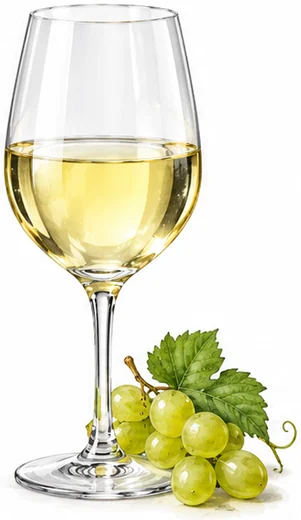
The institute describes typical Riesling as pale yellow, sometimes with a greenish cast, with apple or peach aromas and pronounced acidity. This is a broad grape profile rather than a promise for every vintage. Mature wines may develop different notes, including those described as petrol-like. Minerality is sensory language; it should not replace information about the vineyard, producer or winemaking choices. Nor does a pale appearance establish whether the wine will taste dry or sweet.
Establish the sweetness first
When ordering, ask whether the wine is dry or has noticeable residual sweetness. Trocken on a German label is a useful dry-style indication; Riesling by itself is not. The institute confirms a wide range, from everyday wines to rich sweet examples. This is a key distinction from Tokaji Aszú: Aszú identifies a particular sweet-wine category, whereas regional Riesling leaves a much wider choice. Neither the familiar slender bottle nor a pale colour resolves that choice. Named wines and vintages make comparisons considerably more useful.
Flavour profile
The German Wine Institute highlights apple or peach, pale colour and pronounced acidity. Sweetness, maturity and intensity vary from wine to wine.
How it is served
Serve chilled in a white-wine glass. Start food matching by establishing the wine’s sweetness and consulting its producer’s advice, rather than the grape name alone.
A place on the map
The town point represents the stated region or local tradition; it is neither a surveyed production site nor an appellation boundary.
49.91602°N · 7.07664°E
Find on the map →Sources & further reading
- Deutsches Weininstitut — MoselSource checked: 2026-10-19
- Deutsches Weininstitut — RieslingSource checked: 2026-10-19
Original catalogue sources — original check dates retained
- Deutsches Weininstitut - MoselSource checked: 2026-10-14
- Deutsches Weininstitut - RieslingSource checked: 2026-10-14
Prepared with AI assistance from the cited sources. No first-hand tastings or invented reviews. About the atlas.