Two islands, a specific wine name
IVBAM identifies Madeira and Porto Santo as the source area for the grapes. Madeira is a protected wine name, not a blanket term for everything made on the islands. Local still wines also use separate designations, including Madeirense. The atlas marker locates the archipelago; it does not trace every vineyard or maturation site.
Why fortification matters
Alcohol is added to the wine, and the timing relates to the intended level of sweetness. The institute distinguishes dry, medium-dry, medium-rich and rich wines. Asking whether Madeira is sweet therefore requires a second question: which bottle? Shared origin alone does not determine how a wine should be served or whether it belongs beside dessert.
Understanding estufagem and canteiro
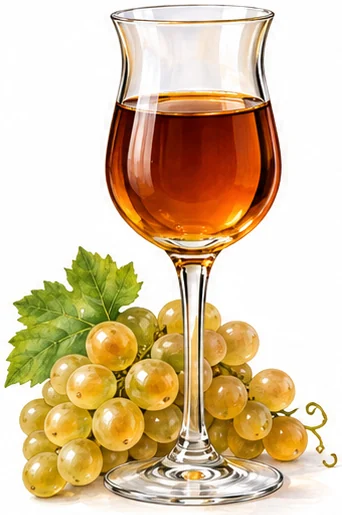
Estufagem uses controlled heating in tanks. Canteiro uses casks kept in warmer parts of the wine lodge, with gradual oxidative maturation. These are production terms, not the names of two grape varieties. They help explain why mature Madeira differs from a fresh still wine. The amber appearance chosen for the illustration represents one mature expression rather than the colour of every Madeira.
A practical way to choose
Begin with the sweetness description, then look at the producer and maturation information. Comparing a dry and a rich Madeira from a clearly identified source is more informative than looking for a single typical flavour. Port is a useful comparison within fortified wine. Poncha offers an island connection but a different drink altogether: its base is a sugarcane spirit.
Flavour profile
The documented range includes four sweetness levels. IVBAM describes canteiro maturation as developing intense, complex aromas; this is not a tasting note for an individual bottle.
How it is served
Use a small wine pour and follow the producer’s serving advice for the particular style and age. One temperature is not assigned to the entire category.
A place on the map
Funchal is a reference point for the whole wine region. This entry includes Madeira and Porto Santo, not only Funchal.
32.66568°N · 16.92547°W
Find on the map →Sources & further reading
- IVBAM — Vinho MadeiraSource checked: 2026-10-19
- IVBAM — Vinification and ageingSource checked: 2026-10-19
Original catalogue sources — original check dates retained
- IVBAM — Vinho MadeiraSource checked: 2026-10-15
Prepared with AI assistance from the cited sources. No first-hand tastings or invented reviews. About the atlas.