What the Lisbon marker means
The Rossio area represents a serving tradition, not a protected production zone. Visit Lisboa describes several established bars and liqueurs of different origins. The city connection is real, but it does not make every ginjinha a Lisbon-made product. The name describes a drink rather than a single company or a recipe owned by one bar.
Fruit, sweetness and appearance
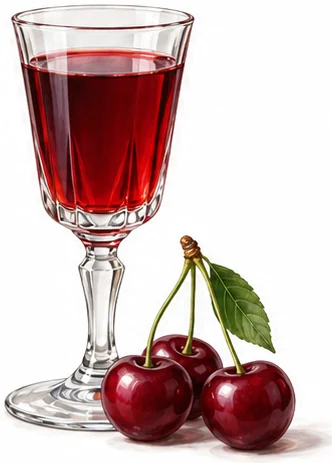
The fruit is sour cherry, rather than sloe or sweet cherry. The liqueur is sweet, while fruit intensity and any spice character depend on the producer. A ruby colour is documented, for example, for Vila das Rainhas from Óbidos. That named example helps with recognition without setting a compulsory recipe or an ingredient list for the whole category.
Small glasses and chocolate cups
In Lisbon, ginjinha may arrive with a cherry or without, in a small glass or in a chocolate cup. The chocolate-cup presentation also has a strong association with Óbidos, documented by Portugal’s national tourism portal. For comparing the liqueurs themselves, plain glass helps keep attention on their differences; chocolate contributes its own flavour to the experience.
Comparing fruit liqueurs
A comparison with another cherry liqueur is a useful introduction, but it does not establish identical strength or flavour. Pacharán uses sloes and an anise-flavoured alcoholic base, making it a different direction. When buying ginjinha, check the producer, the place of manufacture and whether fruit is included. A souvenir bought in Lisbon may have been made elsewhere in Portugal.
Flavour profile
Sweet and cherry-led. Visit Portugal describes one named Óbidos product as intensely fruity and velvety; those details are not assigned to every producer.
How it is served
A small glass, with a cherry or without. A chocolate cup is one recognised presentation rather than an essential feature of the drink.
A place on the map
The Lisbon marker represents an urban tradition. It does not locate a specific Rossio bar or a place of invention. WGS84 source coordinates are retained; decimal places do not imply survey accuracy.
38.72509°N · 9.1498°W
Find on the map →Sources & further reading
- Visit Lisboa — GinjinhaSource checked: 2026-10-19
- Visit Portugal — ÓbidosSource checked: 2026-10-19
- Visit Portugal — FrutóbidosSource checked: 2026-10-19
Original catalogue sources — original check dates retained
- Visit Lisboa - GinjinhaSource checked: 2026-10-14
Prepared with AI assistance from the cited sources. No first-hand tastings or invented reviews. About the atlas.