Why both parts of the name matter
Westmalle identifies the abbey and brewery in Malle, Flanders. Tripel identifies the selected beer alongside the brewery’s Dubbel and Extra. The style name alone does not identify one producer. Nor should this bottle’s description be transferred to every Trappist beer: they have different colours, recipes and origins, including places outside Belgium.
Understanding the Trappist connection
The brewery describes production within the abbey, monastic supervision and income supporting the community, brewery activity and charitable purposes. This is an organisational and origin relationship, not one shared taste profile. Selecting a named product for the atlas demonstrates those principles without inventing a single Belgian appellation covering all monastery-associated beers.
Gold colour and a distinctive profile
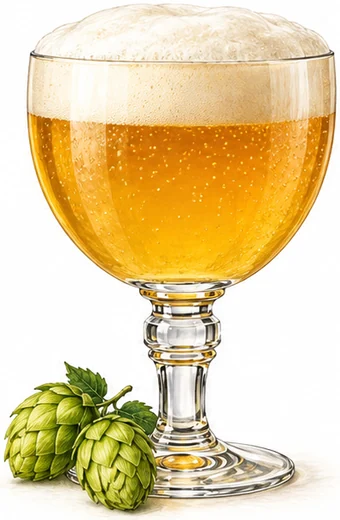
The producer lists 9.5% alcohol, top fermentation and bottle refermentation. Its description includes a clear yellow-gold appearance, fruit aromas suggesting ripe banana, hops and a dry finish. Banana is an aromatic reference, not a declaration that fruit has been added. When pouring a bottle-conditioned beer, allow for the foam and whether the sediment has been disturbed.
Two Belgian routes to bottle fermentation
Oude Geuze makes a useful comparison: it too undergoes fermentation in bottle, but begins with a blend of spontaneously fermented lambics. Westmalle uses the brewery’s own yeast culture. A shared country and bottle conditioning therefore do not establish the same production method. Begin a comparison with how the beer is made, then consider its aromas and mouthfeel.
Flavour profile
The producer describes ripe banana and hop aromas, a creamy texture, bitterness and a long dry finish. These are its product notes, not our own tasting.
How it is served
Use a clean beer goblet, pour steadily and leave room for the head. Follow the bottle or serving staff for the appropriate temperature.
A place on the map
The town point represents the stated region or local tradition; it is neither a surveyed production site nor an appellation boundary.
51.29767°N · 4.69013°E
Find on the map →Sources & further reading
- Brouwerij Westmalle — Westmalle TripelSource checked: 2026-10-19
- Brouwerij Westmalle — TrappistenbierenSource checked: 2026-10-19
- International Trappist Association — WestmalleSource checked: 2026-10-19
Original catalogue sources — original check dates retained
- Brouwerij Westmalle - Westmalle TripelSource checked: 2026-10-14
- International Trappist Association - WestmalleSource checked: 2026-10-14
Prepared with AI assistance from the cited sources. No first-hand tastings or invented reviews. About the atlas.