Two dates, two different events
St James’s Gate in Dublin is the brand’s historic reference point. The date 1759 refers to Arthur Guinness signing the brewery lease. Guinness Draught itself was introduced in 1959 for the two-hundredth anniversary. Keeping those events separate prevents the modern expression from inheriting the entire company history. Dublin’s atlas marker is an orientation point rather than a brewery entrance. If you are planning a visit, use the visitor attraction’s own directions and current booking information.
Dark beer and a pale head
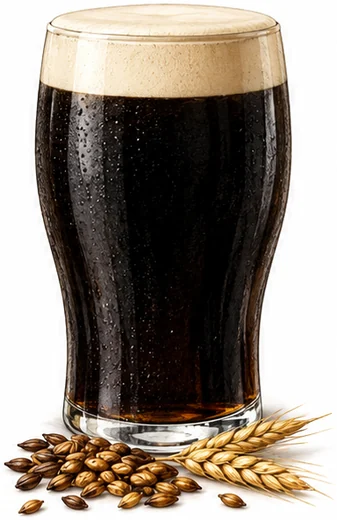
The producer describes the liquid as dark ruby red, despite the familiar nickname suggesting black beer. Its published aroma notes mention roasted coffee and chocolate; its palate description combines bitter, sweet and roasted notes. Those are sensory comparisons, not a claim that coffee or chocolate has been added. The listed ingredients include barley, malted barley, roasted barley and hops. Nitrogen and the creamy head are important parts of the characteristic Draught presentation.
Check which Guinness you are ordering
The company name covers more beers than Draught. When choosing a bottle or can, check the complete product name rather than treating every Guinness stout as the expression described here. For draught service, the producer recommends a two-stage pour with a pause while the head settles; it gives separate instructions for cans. A comparison with a Pilsner-style lager reveals differences in malt character, colour and texture. Dark colour alone, however, does not establish a beer’s alcoholic strength or how much alcohol is in a serving.
Flavour profile
The producer describes roasted coffee and chocolate aromas, balanced bitter, sweet and roasted flavours, and dark ruby liquid under a creamy head.
How it is served
From a tap, serve in a clean glass after the head settles. The pub pouring method should not automatically be applied to every can or bottle.
A place on the map
The town point represents the stated region or local tradition; it is neither a surveyed production site nor an appellation boundary.
53.33306°N · 6.24889°W
Find on the map →Sources & further reading
- Guinness — Guinness DraughtSource checked: 2026-10-19
Original catalogue sources — original check dates retained
- Guinness - Guinness DraughtSource checked: 2026-10-14
- Guinness Storehouse - Getting HereSource checked: 2026-10-14
Prepared with AI assistance from the cited sources. No first-hand tastings or invented reviews. About the atlas.